
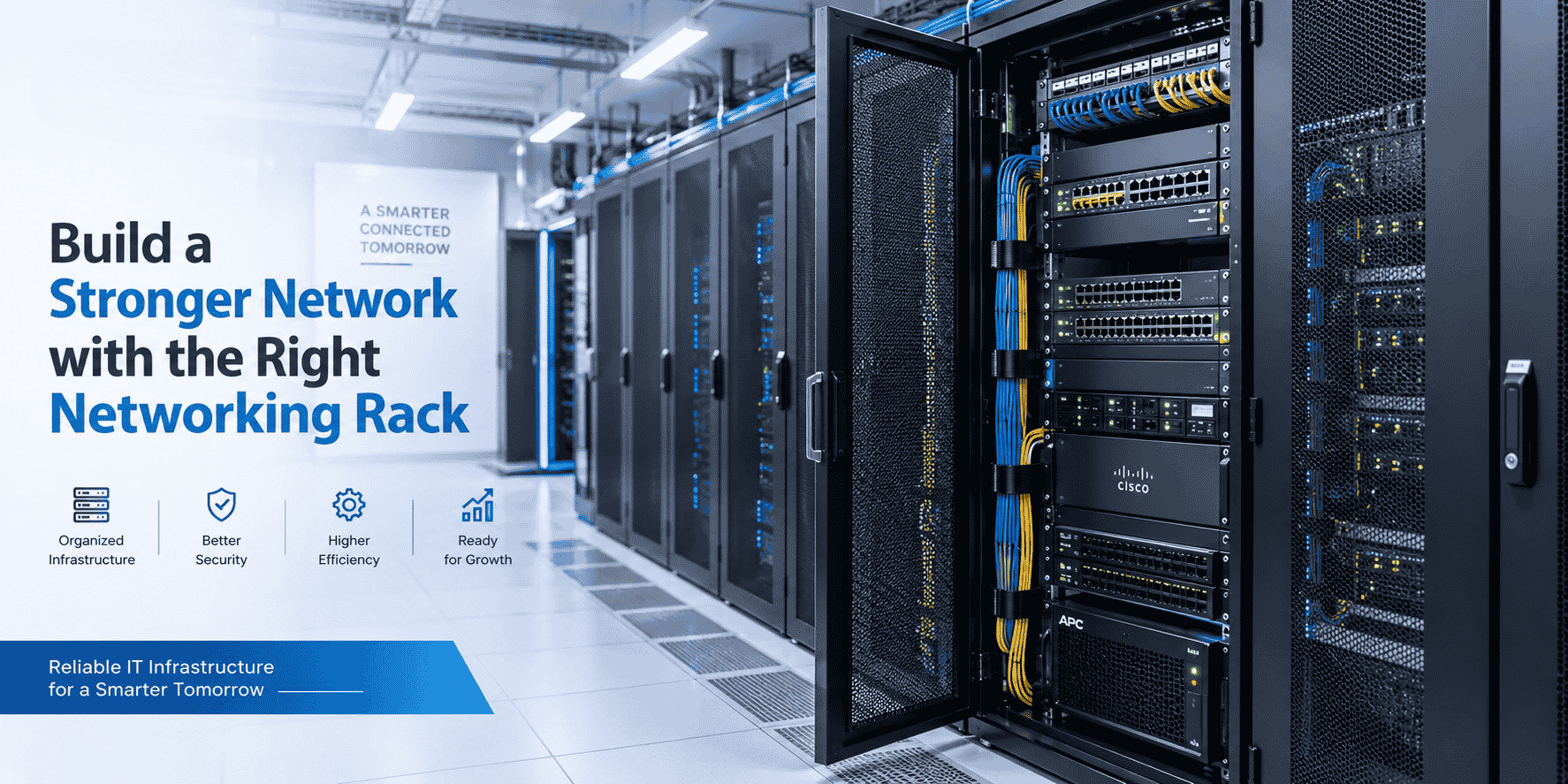
If you are setting up a new server room, upgrading an office network, or expanding a data centre, one decision quietly affects everything else, the networking rack you choose. It is easy to treat a rack as "just a metal cabinet", but the wrong choice leads to overheating equipment, tangled cabling, security risks, and racks that run out of space within a year of installation.
At DigitAge Infocom, we manufacture and supplier networking racks to government offices, PSUs, banks, and enterprises across India, and the same set of questions comes up in almost every conversation. This guide answers them in one place, so you can choose a rack that fits your current setup and has room to grow with it.
What Is a Networking Rack, and Why Does It Matter?
A networking rack (also called a network equipment rack or server rack cabinet) is a standardised frame or enclosure used to mount servers, switches, routers, patch panels, and other IT hardware in an organised, secure manner.
Its job goes beyond storage. A well-designed rack:
- Improves airflow and reduces equipment overheating
- Keeps cabling organised, which speeds up troubleshooting
- Protects sensitive hardware from dust, tampering, and accidental damage
- Makes it easier to scale your infrastructure without rewiring everything
Skip a proper rack setup, and you usually pay for it later, in downtime, repeated cabling rework, or hardware failures caused by poor ventilation.
Types of Networking Racks You Should Know About
Not every environment needs the same rack. Here are the common types used across Indian businesses:
1. 19-Inch Server Rack Cabinet: The industry standard for mounting servers, switches, and networking gear. Available in different heights measured in "U" (rack units), typically ranging from 6U for small setups to 42U for full-scale data centres.
2. Open Frame Racks: Best suited for spaces with controlled access, where airflow matters more than physical security, common in server rooms with restricted entry.
3. Wall-Mounted Racks: Compact racks fixed to a wall, ideal for branch offices or smaller setups with limited floor space, typically housing switches and patch panels rather than full servers.
4. Enclosed Server Racks Fully enclosed with lockable doors and side panels, the preferred choice for data centres, banks, and government offices that need both airflow control and physical security.
Key Factors to Consider Before Buying a Networking Rack
1. Rack Size and U-Height
Calculate the total U-space your current equipment needs, then add at least 30-40% extra capacity for future expansion. Businesses that buy racks sized exactly to current needs are usually back in the market within 18-24 months.
2. Load Capacity
Servers, UPS units, and batteries are heavy. Check the rack's static and dynamic load rating before buying — not just the frame's weight but what it can safely hold once fully loaded with equipment.
3. Ventilation and Cooling
Look for perforated doors, cable management arms that don't block airflow, and options for fan trays. Heat is one of the most common (and most avoidable) causes of hardware failure in Indian server rooms, especially during summer months.
4. Cable Management
Vertical and horizontal cable managers keep patch cords organised, reduce troubleshooting time, and prevent accidental disconnections during maintenance.
5. Physical Security
For BFSI, government, and PSU environments, lockable front and rear doors, along with tamper-proof hinges, are often a compliance requirement — not just a preference.
6. Build Quality and Material
Cold-rolled steel with powder coating resists corrosion and handles daily wear better than lighter-gauge alternatives. This matters more in humid or industrial environments.
7. Compliance with Standards
Ensure the rack complies with relevant EIA/TIA standards for rack unit spacing so that switches, patch panels, and PDUs from different brands fit without modification.
Networking Rack vs. Server Rack: What's the Difference?
The terms are often used interchangeably, but there's a practical distinction:
- A networking rack is generally used for switches, routers, and patch panels, lighter equipment, often with more emphasis on cable management.
- A server rack is built to carry heavier loads (servers, storage units, UPS batteries) and typically needs stronger load ratings and a better cooling design.
Many modern enclosures are designed to serve both purposes, but if your setup includes both heavy servers and networking equipment, it's worth confirming the rack's load rating is suited for the heavier use case.
Common Mistakes Businesses Make When Buying IT Racks
- Buying on price alone a cheaper rack with poor ventilation or weak load capacity often costs more in equipment repairs later.
- Ignoring future growth and undersized racks leads to messy, ad hoc expansions.
- Overlooking accessories PDUs, cable organisers, and cooling fans are often needed from day one, not as an afterthought.
- Not checking after-sales support racks are long-term infrastructure; having a local supplier for spares and support matters, especially outside metro cities.
Why Businesses Choose DigitAge Infocom for Networking Racks
DigitAge Infocom Private Limited has been serving Indian enterprises since 2016 from Nehru Place, New Delhi — one of India's largest IT hardware and networking hubs. A few things set our approach apart:
- We manufacture racks in-house, which means customisation for U-height, load capacity, and accessories is possible rather than being limited to fixed catalogue sizes.
- As an authorised supplier of Cisco and HPE products, we can help you plan the rack around the actual networking hardware it will hold, not the other way around.
- Our Nehru Place base gives government bodies, PSUs, banks, and enterprises across India access to genuine products, fast servicing, and reliable technical support.
If you're planning a new server room or upgrading an existing one, it's worth getting the rack sizing and load calculations reviewed before you order.
Frequently Asked Questions
1. What size networking rack do I need for a small office?
For a small office with a handful of switches and a patch panel, a 6U to 12U wall-mount or open frame rack is usually sufficient. For anything involving servers, plan for at least 18U-24U with room to grow.
2. Can I mix networking equipment and servers in the same rack?
Yes, as long as the rack's load rating and ventilation are designed for the combined weight and heat output. This is best confirmed with your supplier before installation.
3. How often should a networking rack be inspected?
A basic check every 6 months, for loose cabling, dust buildup, and ventilation blockages helps prevent most avoidable hardware issues.
4. Do government and PSU projects require specific rack certifications?
Many do require compliance with EIA/TIA standards and specific security features like lockable doors. It's best to confirm requirements against your project's technical specifications before procurement.
5. Looking to set up or upgrade your server room?
Get in touch with DigitAge Infocom for networking rack solutions built around your business's actual needs, not just a standard catalogue size.