
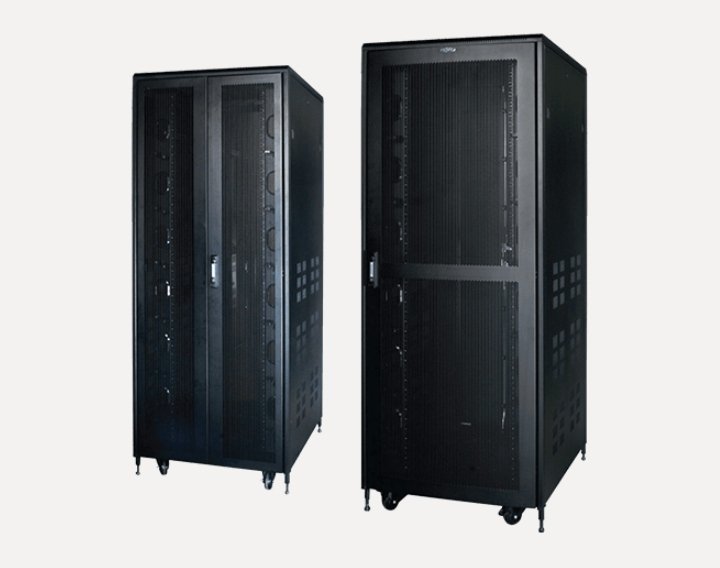
The Networking Rack is an essential component of infrastructure. It is specifically designed to organise and secure house networking tools such as routers, patch panels, servers, switches and structured cabling systems.
These are needed for a professional skeleton that simplifies equipment installation, improves cable organisation and enhances ease of maintenance and upgrades.
Commonly used in workplaces, telecom environments, data centres and enterprise IT setups,Server Racks aids businesses to hold up a structured and professional network structure.
DigitAge Infocom Private Limited is a Trusted Networking Rack Supplier, Networking Rack Dealer, Networking Rack Distributor and Networking Rack Vendor in New Delhi. They offer top-quality Rack Solutions for all modern workplace setups.As a reliable provider Rack Cabinet Manufacturer and Infrastructure Partner, DigitAge Infocom Private Limited provides strong, reliable, scalable rack systems that support your daily networking requirements.
The networking racks we provide are engineered with important features needed to improve performance, hassle-free use and security. These products can also be utilised as a Ventilated Rack Cabinet, ensuring airflow for smooth functioning of the networking devices. With integrated Cable Management Rack Systems, workplaces can easily maintain, clean and arrange cabling for seamless troubleshooting and maintenance.
We also provide flexible installation options, inclusive of Wall Mount Networking Rack Solutions that are suitable for small-spaced offices. And Floor Standing Rack Cabinet can be utilised for enterprise data centres and large networking deployments. Designed with Lockable Server Rack, these products ensure enhanced protection for all important networking and IT equipment.
As a reputed Networking Rack Distributor in Nehru Place, DigitAge Infocom Private Limited gives many Reliable Rack Solutions that support Efficient Network Infrastructure Management for business for all sizes.
REQUEST A DEMO
Category
| Cybersecurity | Antivirus / Firewall / Encryption • Email Security • Endpoint Security • DLP • Mobile Security • Networking and Security • Unified Threat Management |
|---|---|
| Servers, Storage, Backup & Recovery | Data Protection • Backup & Recovery • Console Servers • Intel Based Servers • Storage • Unix Based Servers |
| AIDC & POS | Barcode Devices • Barcode Printers |
| Office Equipment | Attendance Machines • Paper Shredders • Binding Machines • Laminators • Safes • Thermal Scanners / IR Thermometers • Peripherals & Supplies • Barcode Scanners • ID Card Printers • RFID Printers • POS |
| Audio Video | Displays • IP Phones • Projectors • Video Conferencing • TV Peripherals • Switchers & Splitters • Cables & Adapters |
| Components | CPU • External Hard Disk Drives • Graphic Cards • Internal Hard Disk Drives • Motherboards • SSD • TFT / LCD Monitors • Cabinet • SMPS |
| Computer Systems | Consumer Desktops • Notebooks • Workstations • Thin Clients • Gaming Systems • Gaming Monitors |
| Computer Accessories | Universal Chargers • Docking Stations |
| Consumer Product | IoT • Drones |
| Cloud Business Application | eSignatures • File Storage • Productivity Suite • Email Suite • Document Management • CRM • ERP • Business Management • EdTech |
| Cloud Enablement | eSignatures • File Storage • Productivity Suite • Email Suite • Document Management • CRM • ERP • EdTech |
| Cloud Services (IaaS) | Hosting • Colocation • Virtual Machines • Disaster Recovery • Cloud Storage • Backup • Enterprise Data Management |
| Unified Communications / SaaS | BI • Automation • Project Management • Remote Access • Messaging • Customer Engagement • Conferencing • Hosting |
| Cloud Security | Endpoint Security • Identity Management |
| Infrastructure | Backup |
| Infrastructure Software | Data Modelling • Desktop Sharing • Online Meeting |
| IoT | Goods & Asset Monitoring • Video Analytics • Facial Recognition • Plant Monitoring • Predictive Maintenance • Smart City & Enterprise Solutions • Smart Speakers |
| IT Fixtures | Adjustable Desks • Workstations • Mounts • Carts & Trolleys • Charging Stations |
| Mobility & Tablets | Smartphones • Mobile Phones • Feature Phones • Tablets • Accessories • Enterprise Mobility |
| Networking Products | Active Products • Access Points • Controllers • WAN Optimization • EWLAN • Passive Products • Structured Cabling |
| Peripherals & Supplies | Video Conferencing • Printers • Cartridges • Ink Bottles • Keyboards • Webcams • LTO Tape Drive • Photo Paper • POS Printers • Scanners • Storage Media • Toner Cartridges • 3D Printer |
| Physical Security | Access Controls • IP Cameras • NVR • VMS • POE / Non-POE Extenders • Transmission Devices |
| Power (UPS) | DC Power Systems • Precision Cooling • Racks • Integrated Cabinets • UPS • Enterprise UPS • Cooling • Networking Racks |
| Software | Applications • Servers & OS (Licenses) • OEM Packs • Digital Marketing • Enterprise • RPA • Virtualization |